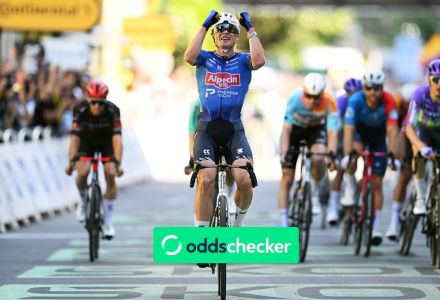
Tour de France fact file
From the very first race in 1903 to the 96th edition this year success in the tour has relied on stamina, skill and no little amount of luck to avoid the inevitable crashes on route.
There are 3 distinct stage types the riders face during the marathon journey around France - the individual time trial, the team time trial and standard mass start stages. The individual time trial is a simple race against the clock where each competitor races the prescribed stage route on their own being released at intervals onto the course. These stages are predominantly flat in order to maintain a true test of pure racing speed rather than technical or climbing ability. The team time trial is a similar proposition but is tackled as a team, allowing riders to make use of the considerable benefits of streamlining, pace setting and rotation. Standard mass start stages begin with the entire field setting off together and can cover a wide range of distances and profiles, usually classified as either 'plain' meaning largely flat, 'medium mountains' indicating some climbing ability will be required and 'high mountains' which normally indicates the stage will be a severe test of climbing and descending. In order to win the overall competition a rider should therefore have strength in all elements and be supported by an able team.
While the main focus is on the "Maillot Jaune", the yellow jersey worn by the leader of the race after each stage and awarded to the overall winner by time at the finale, there are other competitions being keenly contested throughout. The "Maillot Vert" is the green jersey presented to the points winner. At suitable locations throughout the stages, and at the finishing line each day, points are awarded for the order in which the riders cross the line which usually sees the sprint specialists produce some of the more spectacular displays by powering their way through the bunch at the very last to steal victory. The "Polka Dot Jersey" is the 3rd of the main competitions and the most challenging as it aims to establish the king of the mountains for the tour. In similar fashion to the specialist sprinters pursuing the green jersey, the specialist climbers are rewarded with points for the order in which they cross the summits of the notable climbs along the route. In addition to these contests there is the "Maillot Blanc" for the best young rider (under 25) and the most combative rider is highlighted by a unique reversal of the colouring of his riding number for the following day.
Bookmakers offer in-running cycling betting on tour stages, an opportunity for viewers to speculate on the fate of breakaways from the pack so often reeled in by the peloton with precision timing just at the line.