




2028 Democrat Nominee Odds: Jon Ossoff Leapfrogs Gavin Newsom, AOC after Landslide Midterm Victory
Jon Ossoff has emerged as the biggest mover in the 2028 Democratic presidential nomination market following his decisive Senate reelection victory in Georgia and the party's sweeping success in the 2026 midterms. Can Ossoff translate his landslide victory in a presidential battleground into a national campaign, or will Gavin Newsom and Alexandria Ocasio-Cortez regain momentum as Democrats prepare for the next White House race? Check out the latest 2028 Democratic presidential nominee odds and prediction-market outlook for Wednesday, November 4.
Peter Alexis - November 5, 2026, 12:27 PM EST
4 Minute Read2028 Democratic Presidential Nominee Odds: Jon Ossoff Surges Past Newsom and AOC After Midterm Landslide
The race for the 2028 Democratic presidential nomination has experienced its first major post-midterm shakeup, with Georgia Sen. Jon Ossoff surging to 26% in prediction-market pricing following his overwhelming reelection victory on Tuesday. Ossoff has jumped 12 percentage points, moving comfortably ahead of California Gov. Gavin Newsom at 14% and New York Rep. Alexandria Ocasio-Cortez at 13% after the three potential candidates spent much of the summer trading within a relatively narrow range.
The movement comes immediately after Democrats delivered a sweeping midterm victory, capturing both chambers of Congress and flipping several traditionally Republican seats across the country. With the party now looking toward the 2028 presidential election, Ossoff's success in Georgia has renewed discussion about whether a younger candidate with proven statewide appeal could emerge from a crowded field that has yet to produce a clear consensus.
Bet on the next Democrat Nominee and more politics props with Kalshi Here
2028 Democrat Nominee Odds Breakdown
Candidate | Implied Probability |
|---|---|
Jon Ossoff | 26% |
Gavin Newsom | 14% |
AOC | 13% |
2028 Democrat Nominee Odds Breakdown
Jon Ossoff: 26% Chance
Ossoff has surged to a 26% market-implied chance of winning the 2028 Democratic presidential nomination, gaining 12 percentage points in the latest trading period. The Georgia senator spent much of the summer trading around 10% to 15%, largely alongside Newsom and Ocasio-Cortez, before breaking away from the field following his emphatic Senate victory on November 3.
The 39-year-old defeated Republican Rep. Mike Collins by approximately 59% to 41% in near-complete returns, securing a second Senate term in a state Donald Trump carried by roughly two percentage points in 2024. The victory represents a significant political achievement for Ossoff, who first entered the Senate following Georgia's closely contested January 2021 runoff elections and has since established a national profile.
Ossoff's campaign also demonstrated substantial fundraising strength, with the Democrat raising approximately $126 million more than Collins during the election cycle. His reelection effort emphasized economic concerns, government accountability and opposition to Trump's policies, allowing him to campaign on many of the same issues that dominated Democratic messaging nationwide.
However, Ossoff has repeatedly denied having presidential ambitions, stating during the Senate campaign that he had no interest in running in 2028 and intended to serve his full six-year term. His sudden rise in prediction-market pricing therefore reflects growing speculation about a potential candidacy rather than any announcement that he intends to enter the presidential race.
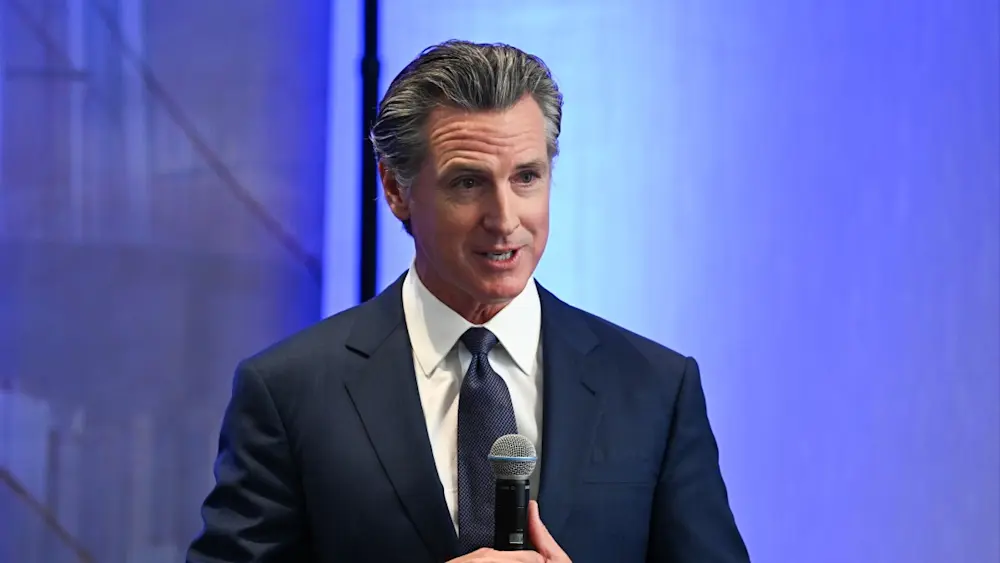
Gavin Newsom: 14% Chance
Newsom has slipped to a 14% market-implied chance of securing the Democratic nomination, continuing a prolonged decline from the considerably stronger position he maintained during the second half of 2025. The outgoing California governor traded above 30% at various points last year before gradually losing ground as other potential candidates attracted attention throughout 2026.
The two-term governor has been among the most visible Democratic critics of Trump, frequently challenging the administration over immigration, federal spending and disputes involving California. Newsom also played a prominent role in the party's midterm strategy, particularly through his support for congressional redistricting efforts designed to counter Republican gains elsewhere.
With his second gubernatorial term ending in January 2027, Newsom will have the opportunity to pursue national political activity without the immediate responsibilities of running California. His extensive fundraising network, executive experience and national recognition remain notable elements of his political profile, although the latest market movement demonstrates that traders have become increasingly interested in alternatives.
Newsom has also faced questions about whether his California political background would translate effectively into a national presidential campaign. His positions on progressive social issues, economic regulation and the state's affordability challenges could become central subjects in any eventual Democratic primary contest.
Alexandria Ocasio-Cortez: 13% Chance
Ocasio-Cortez is priced at 13%, remaining close to Newsom after spending much of the summer competing near the top of the Democratic nomination market. The New York congresswoman briefly moved ahead of Newsom during portions of the year, but Ossoff's post-election surge has created a more substantial gap between her price and the highest-priced candidate.
One of the most recognizable figures in the Democratic Party's progressive wing, Ocasio-Cortez has developed a national following through her advocacy for healthcare reform, affordable housing, climate policy and economic redistribution. Her political identity and appeal among younger progressive voters have made her a recurring subject of presidential speculation, despite her relatively limited experience outside Congress.
Ocasio-Cortez was also active in the 2026 midterm campaign, particularly through her support for Abdul El-Sayed's successful Senate bid in Michigan. Her involvement in that contest demonstrated her role as a national campaign surrogate and offered an opportunity to build relationships with Democratic activists beyond her home state.
The congresswoman has not formally announced a presidential campaign, leaving open questions about whether she will pursue the nomination or another political opportunity. A potential candidacy would likely generate significant debate within the Democratic Party over its ideological direction, particularly following an election cycle that produced victories for candidates representing several different wings of the party.
How Does the Democratic Midterm Sweep Change the 2028 Presidential Race?
The Democratic Party's sweeping success in the 2026 midterms has transformed the political environment ahead of the next presidential election. Democrats regained control of the House and Senate while winning competitive races across states that supported Trump in 2024, creating new questions about which candidates and campaign approaches could translate that congressional success into a White House victory.
Ossoff's emergence is especially notable because his victory occurred in Georgia, one of the country's most closely contested presidential battlegrounds. His approximately 18-point reelection margin stands in sharp contrast to Trump's narrow statewide victory two years earlier, although the different candidates and turnout patterns make direct comparisons between the two elections imperfect.
The party's recent presidential history provides additional context. Hillary Clinton lost to Trump in 2016, Joe Biden defeated him in 2020, and Kamala Harris lost in 2024, leaving Democrats with two defeats in the past three presidential elections. The 2026 midterm results now provide a different set of electoral examples as potential candidates consider how to build a national coalition.
However, the Democratic presidential field remains far from settled. Beyond Ossoff, Newsom and Ocasio-Cortez, potential contenders include Pete Buttigieg, Josh Shapiro, Andy Beshear, Kamala Harris and several other prominent Democratic officials, many of whom have yet to make definitive decisions about 2028.
2028 Democratic Presidential Election Outlook: Can Ossoff Build on His Momentum?
Ossoff's sudden rise represents the first major realignment of the Democratic nomination market following the midterm elections. His 26% price is now nearly double those of Newsom and Ocasio-Cortez, an important departure from the relatively competitive three-way pricing that characterized much of the summer.
The broader market has generated more than $33 million in reported trading volume, reflecting substantial interest in a nomination contest that remains nearly two years away. These percentages represent market-implied chances rather than primary polling or confirmed campaign support, and the standings could change considerably once candidates announce their intentions.
The biggest immediate uncertainty surrounds Ossoff himself, whose repeated statements that he does not intend to run contrast with the growing market speculation surrounding his political future. Newsom and Ocasio-Cortez also retain substantial public profiles, while governors and other national Democrats have opportunities to attract attention as the party begins debating its priorities for 2028.
For now, Ossoff's decisive Georgia victory has reshaped the early nomination market and made him a central figure in the party's post-midterm discussion. Whether that momentum develops into an actual presidential campaign remains unresolved, but the Democratic sweep has already changed the conversation about the candidates who could lead the party into its next White House election.
More of oddschecker