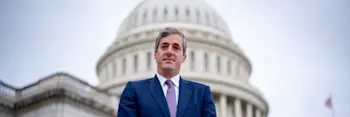







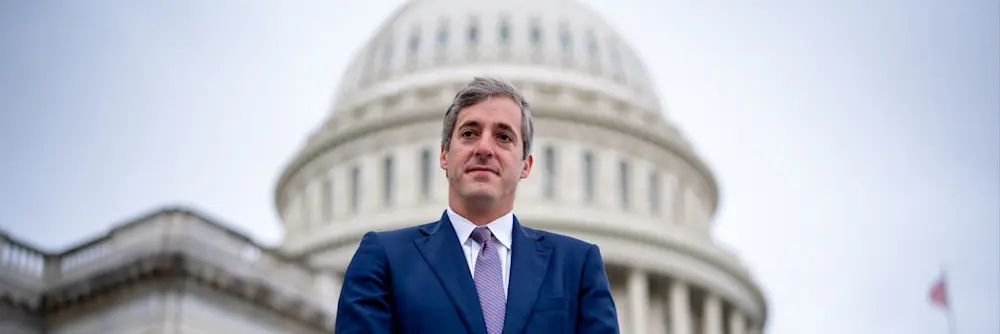
North Carolina District 13 House Election Odds: Paul Barringer Closes Gap with Brad Knott in NC-13
North Carolina's 13th Congressional District has experienced one of the sharpest late prediction-market shifts of the 2026 midterm elections, with Republican incumbent Brad Knott's once-commanding advantage shrinking dramatically against Democrat Paul Barringer. Can Barringer overcome the district's Republican voting history and deliver an unexpected House pickup, or will Knott preserve his seat as Democrats attempt to reclaim the chamber? Check out the latest North Carolina 13th District House election odds and prediction-market outlook for Tuesday, November 3.
Peter Alexis - November 3, 2026, 4:35 PM EST
4 Minute ReadNC-13 House Election Odds: Brad Knott's Massive Lead Disappears Against Paul Barringer
North Carolina's 13th Congressional District has emerged as an unexpectedly competitive House race entering Election Day, with Republican incumbent Brad Knott seeing his prediction-market advantage collapse during the final weeks of the campaign. Knott is now priced at 60% against Democrat Paul Barringer's 41%, a dramatic change from the roughly 85%-15% split that persisted through much of the election cycle.
The sudden movement has attracted attention because Knott won the district by more than 17 percentage points in 2024, while Republicans have maintained a substantial advantage under the district's recent congressional boundaries. With Democrats targeting additional Republican-held seats in their effort to reclaim the House majority, the narrowing market has made NC-13 a more closely watched contest than earlier expectations suggested.
Bet on the NC House Race Odds and more politics props with Polymarket Here
NC-13 House Odds
Candidate | Implied Probability |
|---|---|
Brad Knott | 60% |
Paul Barringer | 41% |
NC-13 House Election Prediction Market
Brad Knott (R): 60% Chance
Knott enters Election Day priced at 60%, having fallen approximately 25 percentage points from the mid-80s where he traded throughout much of the summer and early October. His market-implied chance remained remarkably stable for several months before declining sharply during the closing weeks, briefly approaching 55% as the election neared.
The first-term congressman won his initial House election in 2024, defeating Democrat Frank Pierce with 58.6% of the vote against 41.4%. A former federal prosecutor, Knott has emphasized immigration enforcement, public safety and economic growth while aligning himself with the broader Republican legislative agenda in Washington.
Knott's campaign has also maintained a fundraising advantage, bringing in approximately $1.7 million compared with Barringer's $1.2 million through mid-October. His incumbency, established Republican support and the district's voting history provide important context for the race, although the late market movement indicates a substantial change in traders' expectations.
The district's boundaries have also changed ahead of the 2026 election, complicating direct comparisons with the previous result. Nevertheless, the area's Republican voting patterns remain significant, and Knott's performance among conservative and rural voters will be important as election results are reported.
Paul Barringer (D): 41% Chance
Barringer has climbed to 41% in prediction-market pricing after spending much of the election cycle around 15% to 20%. His sharp improvement during the final weeks represents one of the more notable Democratic market gains in a Republican-held House district, with the gap between the candidates narrowing substantially before Election Day.
The Democratic challenger is a healthcare consultant, attorney and tree farmer from Lee County who is making his first run for public office. Barringer has emphasized healthcare affordability, economic concerns, government accountability and practical problem-solving while presenting himself as an alternative to the established partisan divisions in Washington.
His campaign has attracted increased attention from national Democrats, who added the district to their expanded list of Republican-held seats to contest in October. That development coincided with growing campaign activity, although the precise relationship between increased political attention and the market's late movement remains uncertain.
Barringer has also highlighted his background in healthcare and public policy, arguing that voters need more attention on the cost of living and access to essential services. His campaign represents an effort to compete beyond traditional Democratic strongholds, particularly among independent voters and Republicans dissatisfied with the national political environment.
Could Paul Barringer Flip NC-13 as Democrats Target a House Majority?
The political significance of NC-13 extends beyond the individual candidates because Democrats need a relatively small net gain of seats to reach the 218 required for a House majority. A Democratic victory in a district that Republicans won comfortably two years earlier would represent an additional pickup outside the most obvious battlegrounds.
However, the election's underlying fundamentals remain an important counterweight to the market movement. The district supported Trump by approximately 17 percentage points in 2024, and the race has not produced substantial public head-to-head polling that would independently confirm a dramatic change in voter preferences.
The lack of polling is particularly important when interpreting the 60%-41% prediction-market split. Those figures represent market-implied chances of winning rather than projected vote shares, and a relatively large movement in contract prices does not necessarily imply an equivalent change in the expected election margin.
The final electorate will also include Libertarian candidate Steven Swinton, introducing a third-party option alongside the major-party nominees. Turnout across rural communities, smaller cities and the suburban areas north and east of Raleigh will help determine how the district's voting patterns compare with previous elections.
With approximately $742,000 in reported trading volume and Knott's market-implied chance falling from the mid-80s to 60%, the race has undergone a substantial late repricing. The shift illustrates the uncertainty surrounding several Republican-held districts as Democrats seek to expand their opportunities for House pickups, although the outcome will ultimately depend on the ballots counted rather than the market's closing prices.
- Pick: Brad Knott (60%) Bet on the NC-13 House Odds with Polymarket Here
More of oddschecker
Affiliate Disclosure.
We are not a gambling or betting operator, but we receive a commission from these companies when we advertise their brands and refer customers to them (affiliate marketing). We provide information, odds information and links to websites of these companies. Some of the information made available on our site may be positioned as a result of a commission paid to us by a third party. We do not take or place bets/transactions and any information on Our Products is provided for entertainment purposes only.