Racing is full steam ahead (behind closed doors)...
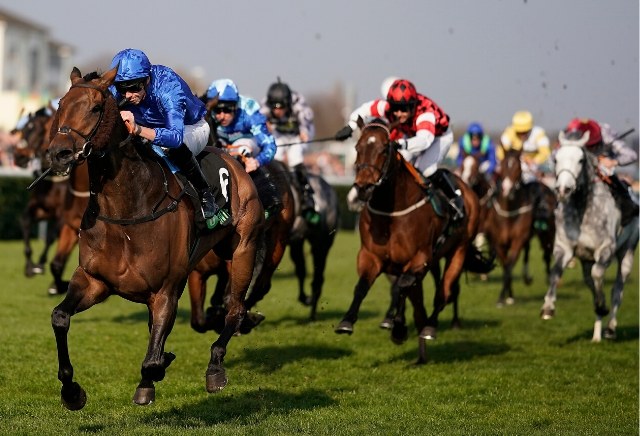
With sports cancelled up and down the country, horse racing is still going strong, despite being held behind closed doors.
But, what if you don’t know anything about the sport? Oddschecker has pulled together some of the most important FAQs surrounding horse racing.
What are the different types of bets?
There are a number of different ways of betting on horse racing, as with other major sports.
The main thing to remember when backing a horse is that you can either bet it to win or each-way.
A win bet is as simple as it sounds. It’s one simple bet where you’re backing the winner of the race.
The other major type, each-way, is effectively two bets within one. You are backing your desired horse to win, but you’re also backing it to ‘place’.
What does 'Placing' mean?
‘Placing’ simply means your horse has finished in the designated runner up spots, with place terms differing based on how many horses are in the race, and how many places bookmakers are offering.
For example, if you bet £10 each-way on a horse at 8/1 in a 16-runner race – if it finishes with a place, you would receive £30. (1/4 odds x your stake plus your £10 stake).
If the horse you backed won that race, you would receive £120 (your £30 place bet return plus £90 for your £10 win bet.)
Three golden rules for horse racing punters - by Andy Holding
"If you're not going to win, make sure you don't lose."
— Oddschecker (@Oddschecker) November 22, 2019
@Holding_Andy gives us his three golden rules for horse racing punters. pic.twitter.com/HuGXtDPupx
Why use Oddschecker?
Oddschecker is the punters’ best friend when betting on horse racing, whether it be for getting the best odds or the best tips.
Our odds grids show whether a horse is shortening (selection will turn blue) or if it is drifting (selection will turn red).
If a horse shortens, it means that its odds have dropped and has a better theoretical chance of winning, according to the bookmakers.
If it has drifted, it means the opposite and the odds on the horse are getting longer, and has a theoretical smaller chance of winning.
Another key reason to use Oddschecker is our daily horse racing tipster, Andy Holding, who is a whopping 43 points up this year.
In layman’s terms, that means if you put £10 on every Holding tip, you’d have £430 profit.
Finally, a major reason to use Oddschecker is to get the best place terms.
For example, for the Supreme Novices' Hurdle at Cheltenham, Sky Bet was paying 3 places, compared to William Hill's 7 places.
What does the SP favourite mean?
The ‘SP’ simply stands for ‘starting price’ of the horse when it goes off. In terms of how the SP is calculated, horse racing officials at the designated racing track will examine data from the on-track bookmakers.
It’s typically decided by a panel, which looks at the movement of prices on a said race track.
If you have backed a horse at 3/1, and the SP goes off at 4/1, you will generally be paid out at 4/1, if your bookie offers ‘Best Odds Guaranteed’, otherwise known as ‘BOG’.
It hasn't yet been announced how the SP will be calculated with racing behind closed doors, with on-course bookmaking temporarily suspended.
How to make it as a professional punter - by Andy Holding
"Whittle down the horses you're looking at. Make sure you specialise and know these horses off by heart."
— Oddschecker (@Oddschecker) January 6, 2020
How to make it as a professional punter, by @Holding_Andy. pic.twitter.com/CNWESDbEc9
How do I read about a horses form?
In horse racing, form refers to the horse’s record over a number of runs. There are a number of different abbreviations used, which are:
1-9: The position that the horse finished in the race
0: Finished outside the top 9
P/PU: Pulled up
F: Fell
S: Slipped Up
R: Refusal
B: Brought Down
U: Unseated Rider
-: Separates years
/: Separates racing sessions
BD: If a horse was brought down by another runner
BF: Means that it’s a beaten favourite
CD: If a horse has won over course and distance
What is flat racing?
First of all, there are broadly two different types of racing. Throughout the year, punters can bet on either flat racing or National Hunt racing.
Flat racing is perhaps the most straightforward, with horses starting in stalls, running either in a straight line or around a curved track, and then finishing at the post.
The first horse to be ‘first past the post’ is crowned the winner. There are also no obstacles in the race for the horses to navigate.
What is National Hunt Racing?
This is the other popular form of racing that can be broadly split between three main categories – hurdles, steeplechases and bumpers.
The main difference between the first two are horses that compete in steeplechases will jump higher and more solid fences than those in hurdle races.
There are also open ditches and water jumps in steeplechases, unlike in hurdles.
Bumpers can be defined as a flat race run under the rules of jumps racing. The idea behind bumper races are to get horses who have not previously run on the flat used to the conditions.