






Ohio Governor Odds: Will Amy Acton Cruise to Victory on Tuesday Night Over Vivek Ramaswamy?
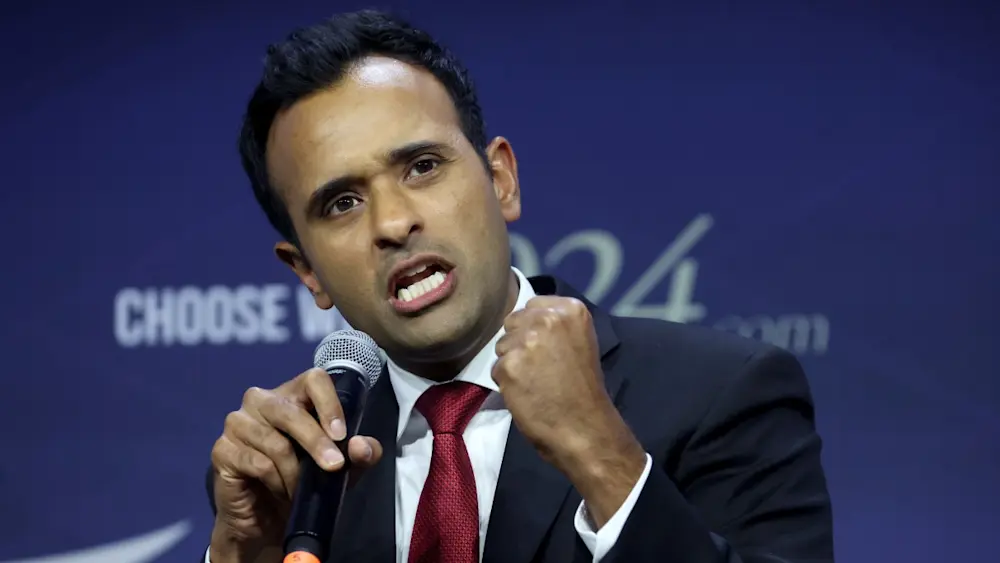
Ohio's 2026 governor's race has taken an unexpected turn, with Democrat Amy Acton holding a commanding prediction-market advantage over Republican Vivek Ramaswamy in a state that voted decisively for Donald Trump just two years ago. Can Acton become Ohio's first Democratic governor in 20 years and its first female governor, or will Ramaswamy overcome the polling deficit to preserve Republican control? Check out the latest Ohio governor election odds, polling, and prediction-market outlook for Tuesday, November 3.
Peter Alexis - November 3, 2026, 10:00 AM EST
4 Minute ReadOhio Governor Election Odds: Amy Acton Holds Massive Lead Over Vivek Ramaswamy
Ohio's gubernatorial election enters November 3 with Democrat Amy Acton holding an overwhelming advantage in prediction-market pricing, despite the state's longstanding Republican voting history. Acton is priced at 83% on Kalshi, compared with just 17% for Republican Vivek Ramaswamy, creating one of the most significant market disparities among competitive gubernatorial contests this election cycle.
The race to replace term-limited Republican Gov. Mike DeWine has become a major opportunity for Democrats, who have not won an Ohio gubernatorial election since 2006. Recent polling has consistently shown Acton ahead, although the margins remain considerably closer than the prediction-market prices suggest, leaving turnout and late voter preferences as important factors heading into Election Night.
Bet on the Ohio Governor Race and more politics props with Kalshi Here
Latest Ohio Governor Odds from Kalshi
Candidate | Implied Probability |
|---|---|
Amy Acton (D) | 83% |
Vivek Ramaswamy (R) | 17% |
Ohio Governor Prediction Market
Amy Acton: 83% Chance
Acton enters Election Day with an 83% market-implied chance of winning Ohio's governorship, establishing a substantial advantage over her Republican opponent. The Democrat's pricing reflects a wide gap between the two candidates in Kalshi's election market, which has generated more than $10.8 million in reported trading volume.
The former Ohio Department of Health director became a prominent statewide figure during the COVID-19 pandemic, serving under Republican Gov. Mike DeWine during the initial public health emergency. Acton has since built her gubernatorial campaign around affordability, healthcare, education and government accountability, presenting herself as a candidate willing to work across party lines.
Vivek Ramaswamy: 17% Chance
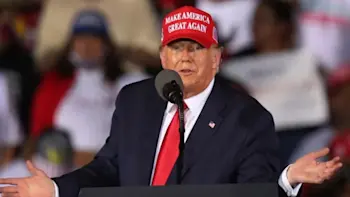
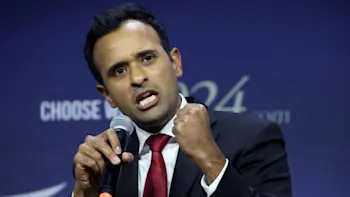
Ramaswamy is priced at just 17% on Kalshi, a striking position for the Republican nominee in a state that Donald Trump carried by approximately 11 percentage points in 2024. Despite entering the campaign with significant financial resources, national recognition and Trump's endorsement, the former presidential candidate has struggled to establish a sustained advantage in public polling.
The biotechnology entrepreneur has emphasized economic growth, tax reductions, deregulation and his business experience throughout the campaign. Ramaswamy has also made Acton's leadership during the COVID-19 pandemic a central issue, arguing that restrictions on businesses and schools caused lasting economic and educational damage.
Ohio Governor Polling: Acton Leads Ramaswamy by 4.5 Points
Public polling reinforces the strength of Acton's position entering Election Day, although the actual voting margins appear substantially closer than Kalshi's 83%-17% market split. The RealClearPolling average covering October 9 through November 1 placed Acton at 49.6% and Ramaswamy at 45.1%, giving the Democrat a 4.5-point advantage.
Several late surveys have shown Acton maintaining a measurable lead. A New York Times/Siena poll conducted October 26 through November 1 placed Acton ahead 49% to 43%, while AtlasIntel measured a 52%-44% advantage and YouGov recorded a 52%-46% margin. An InsiderAdvantage survey showed a narrower 49%-46% contest, illustrating variation between individual polls.
Not every survey has produced a clear Acton advantage. An Emerson College poll conducted October 31 through November 1 measured both candidates at approximately 48%, demonstrating that the outcome remains sensitive to differences in likely-voter models and turnout assumptions.
The distinction between polling and prediction-market pricing is particularly important in Ohio. Acton's 83% Kalshi price reflects the market-implied chance of winning, not an expectation that she will receive 83% of the vote, while polling generally indicates a contest separated by several percentage points rather than an overwhelming difference in voter support.
Why Is Amy Acton Performing So Well in Republican Ohio?
Ohio's recent political history makes the competitiveness of this gubernatorial election particularly notable. Trump carried the state in 2016, 2020 and 2024, while Republicans have maintained control of the governor's office since January 2011 and strengthened their position in many statewide elections.
However, Acton's campaign differs from a traditional contest between two experienced partisan politicians. Her background as a physician and former public health director has provided an identity outside electoral politics, while her previous service in DeWine's Republican administration has created an unusual dynamic in a deeply polarized political environment.
Acton has emphasized economic concerns that extend beyond party affiliation, including property taxes, healthcare expenses, utility costs and public education. Those issues have featured prominently in the campaign as voters assess the state's economic direction and the competing approaches offered by the two candidates.
Polling has also highlighted Acton's performance among independent and moderate voters. An October 27-31 Rasmussen Reports survey showed her leading Ramaswamy 54% to 36% among independents and 56% to 36% among self-described moderates, despite the state's overall Republican voting history.
Ramaswamy's Controversial Attack Ad Creates Late Campaign Turmoil
One of the most consequential developments during the closing days of the campaign involved a Ramaswamy advertisement featuring Acton's estranged mother. The ad challenged Acton's honesty and generated bipartisan criticism, bringing renewed national attention to the race just before Election Day.
Republican Gov. Mike DeWine publicly criticized the advertisement and called for its removal, despite having endorsed Ramaswamy. President Trump and Vice President JD Vance defended the Republican nominee, while Acton condemned the advertisement and her campaign experienced an increase in fundraising following the controversy.
Ramaswamy defended the advertisement as a legitimate examination of Acton's credibility, while critics argued that it improperly involved painful details from her childhood. His campaign subsequently stopped airing the spot, but the disagreement remained a prominent issue during the final days of the election.
The controversy adds another dimension to a campaign in which Ramaswamy and his allies have significantly outspent Acton and the Democrats. Total spending has exceeded $100 million, demonstrating the substantial financial resources committed to a gubernatorial race that has become increasingly prominent nationally.
Could Vivek Ramaswamy Still Benefit From Republican Turnout?
Ohio's Republican voting history remains an important consideration when comparing polling with actual election results. The state's substantial support for Trump in recent presidential elections demonstrates the size of the Republican electorate, particularly across rural counties, smaller cities and conservative communities outside the largest metropolitan areas.
Ramaswamy has emphasized his alignment with Trump's economic and political agenda while campaigning throughout the state, including areas that have delivered significant Republican margins in previous elections. His performance among those voters will be important in determining whether the statewide result follows the pattern suggested by recent polling.
Acton's vote totals in Cleveland, Columbus, Cincinnati, Toledo and Akron will be equally important, particularly in determining the size of Democratic margins in major population centers. Suburban communities surrounding those cities could also be influential, given the relatively narrow margins measured in several public polls.
The presence of Libertarian candidate Donald Kissick adds another variable, with some late surveys measuring his support around 3% to 4%. In a competitive race, third-party voting and the behavior of undecided voters can affect the final margin, although the direction and size of any impact cannot be established from polling alone.
Could Amy Acton Become Ohio's First Female Governor?
An Acton victory would mark a major historical milestone, making her the first woman elected governor of Ohio. The state has never had a female governor, despite women having held other prominent statewide and federal offices throughout its history.
It would also end a 20-year Democratic gubernatorial election drought. Ted Strickland became the last Democrat elected governor of Ohio when he defeated Republican Ken Blackwell in 2006, before losing his reelection campaign to John Kasich in 2010.
Republicans have controlled the office ever since, with Kasich winning reelection in 2014 and DeWine securing victories in 2018 and 2022. DeWine is prohibited from seeking a third consecutive term, creating an open-seat contest between two nominees who have never previously held elected office.
Ramaswamy would also make history if elected, becoming Ohio's first Indian-American governor. The election therefore offers two distinct historical possibilities while determining which party controls the state's executive branch for the next four years.
Ohio Governor Election Outlook: Will Acton's Massive Market Lead Hold?
Ohio enters Election Day with one of the clearest differences between recent presidential voting patterns and current gubernatorial election pricing. Acton's 83% Kalshi figure stands well above Ramaswamy's 17%, despite Trump carrying the state by double digits just two years earlier.
The polling picture provides useful context for that market disparity, with Acton holding a 4.5-point advantage in the RealClearPolling average. However, individual surveys have ranged from a virtual tie to an eight-point Democratic lead, illustrating the uncertainty surrounding the actual statewide margin.
The final days of the campaign have featured intense spending, debate over economic policies and a controversial attack advertisement that brought additional attention to the candidates. Those developments have unfolded alongside an election in which independent voters, rural turnout and suburban voting patterns will all contribute to the final result.
For Democrats, the contest represents an opportunity to regain the Ohio governorship for the first time since 2010 while potentially electing the state's first female governor. For Republicans, the election will determine whether their longstanding statewide political strength extends to another four years of control under a new nominee.
With more than $10.8 million in Kalshi trading volume and Acton priced at 83%, Ohio's governor race enters Election Day with a substantial gap between the candidates in prediction-market pricing. Whether that gap reflects the eventual result will become clearer as votes are counted, with the final statewide totals determining the next chapter in Ohio's political history.
More of oddschecker
Affiliate Disclosure.
We are not a gambling or betting operator, but we receive a commission from these companies when we advertise their brands and refer customers to them (affiliate marketing). We provide information, odds information and links to websites of these companies. Some of the information made available on our site may be positioned as a result of a commission paid to us by a third party. We do not take or place bets/transactions and any information on Our Products is provided for entertainment purposes only.