




Next Nvidia CEO Odds: Who Will Take Over the World's Top Chip Company After Jensen Huang Resigned?
Nvidia faces a historic leadership transition after co-founder Jensen Huang resigned as CEO on Thursday morning, sending shares of the artificial intelligence giant sharply lower and triggering speculation over his permanent successor. Can longtime executives Ian Buck or Colette Kress stabilize one of the world's most valuable companies, or will Nvidia turn to an outside candidate such as Arm CEO Rene Haas? Check out the latest Nvidia next CEO odds and prediction-market outlook for Thursday, November 12.
Peter Alexis - November 12, 2026, 11:30 AM EST
4 Minute ReadNvidia Next CEO Odds: Ian Buck Emerges as Favorite After Jensen Huang Resigns and Stock Plunges
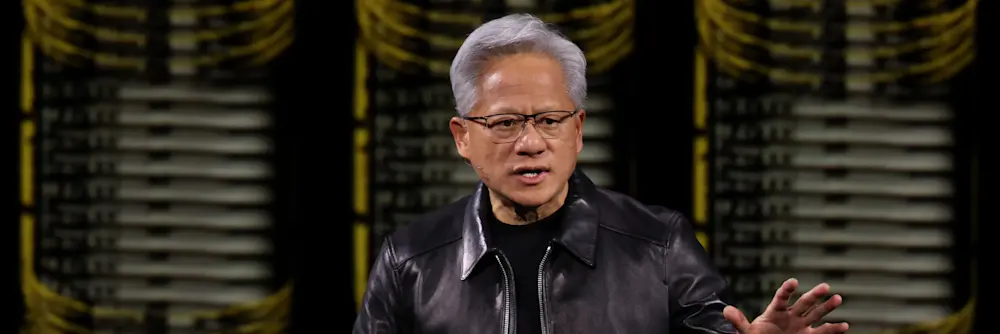
Nvidia is searching for a new chief executive for the first time in its 33-year history after Jensen Huang resigned Thursday morning amid growing scrutiny surrounding reports of two extramarital affairs. The abrupt departure sent Nvidia shares tumbling more than 7% during early trading, creating fresh uncertainty for one of the world's three most valuable companies and a central force behind the artificial intelligence boom.
Colette Kress, Nvidia's longtime chief financial officer, has been appointed interim CEO while the board searches for a permanent replacement. However, Ian Buck has emerged as the leading candidate in prediction-market pricing at 37%, followed by Kress at 20% and Arm CEO Rene Haas at 10%. The market specifically excludes interim or acting appointments, meaning Kress must secure the permanent position for her contract to qualify.
Bet on Jensen Huang's Departure and other business props with Kalshi Here
Jensen Huang Replacement Market Odds Breakdown
Ian Buck: 37% Chance
Buck leads the market with a 37% market-implied chance of becoming Nvidia's next permanent CEO, surging 23 percentage points as the company begins its leadership search. His price has fluctuated considerably since the market opened, briefly climbing above 40% before settling in the upper 30s, reflecting growing attention toward Nvidia's internal engineering leadership.
The veteran executive is one of Nvidia's most important technical figures, having helped develop CUDA, the software platform that has become central to the company's dominance in accelerated computing. Buck currently oversees major AI hardware and software products for hyperscale customers, placing him close to the technology and commercial relationships driving Nvidia's extraordinary growth.
His deep engineering background offers continuity with the technical culture Huang established, particularly as Nvidia competes to maintain its advantage in AI infrastructure. However, the transition from leading engineering and product development to managing a multitrillion-dollar public company would introduce substantial new responsibilities, including financial strategy, investor relations and geopolitical negotiations.
Colette Kress: 20% Chance
Kress holds a 20% market-implied chance of becoming Nvidia's permanent CEO, gaining three percentage points following Huang's departure. The longtime executive has already been appointed interim chief executive, giving her immediate responsibility for maintaining operations and investor confidence during one of the most challenging periods in Nvidia's history.
Kress joined Nvidia in 2013 and has served as executive vice president and chief financial officer throughout the company's transformation into an AI industry powerhouse. She previously held senior financial positions at Cisco and Microsoft, bringing extensive experience in corporate finance, capital allocation and relationships with major technology customers.
Her appointment provides immediate leadership continuity, particularly as Nvidia prepares to report quarterly earnings on November 17. However, serving as interim CEO does not guarantee the permanent position, and the board has indicated that its search will consider both internal and external candidates. Her performance during the transition could become an important consideration as the selection process develops.
Rene Haas: 10% Chance
Haas sits third at 10%, falling 20 percentage points after initially attracting considerable interest as a possible outside replacement. The Arm CEO briefly surged toward 30% during Wednesday's leadership speculation before losing ground as Nvidia's internal candidates became more prominent in the market.
The 63-year-old executive has led Arm since 2022 and previously spent several years at Nvidia, where he served in senior management roles before joining the British semiconductor designer. His experience in the chip industry, relationships with major technology companies and familiarity with Nvidia's business provide a different profile from those of the current internal contenders.
However, appointing Haas would require Nvidia to recruit the sitting CEO of another major semiconductor company, potentially creating a more complicated transition. Arm also operates under a different business model centered on licensing processor designs and intellectual property, meaning a move to Nvidia would involve a significant change in operational responsibilities.
Why Did Jensen Huang Resign, and How Much Has Nvidia Stock Fallen?
Huang's departure follows several days of controversy involving reports of two extramarital affairs, including one involving a woman suspected of ties to Chinese intelligence and another reportedly involving an Nvidia executive. Huang publicly apologized for infidelity earlier in the week, while Nvidia launched an independent investigation into potential national security concerns. The company has not established that sensitive information was compromised, and its formal resignation announcement did not identify the allegations as the reason for his departure.
The market reaction has been severe, with Nvidia shares falling approximately 7.6% during Thursday morning's trading after declining even further immediately following the announcement. The selloff reflects concerns about replacing a founder who played an unusually direct role in the company's product strategy, customer relationships and long-term technological direction. Nvidia's dominant AI computing business remains intact, but investors must now assess how effectively that business can operate without Huang's leadership.
Nvidia Next CEO Outlook: Who Can Stabilize the AI Giant?
Nvidia's board faces an unusually consequential succession decision, particularly with quarterly earnings scheduled for November 17 and the company's AI infrastructure business attracting intense investor scrutiny. Buck's 37% market price reflects attention toward technical continuity, while Kress' 20% offers a different path centered on financial management and her existing interim leadership role.
Haas remains a prominent outside possibility at 10%, although the board has not announced a shortlist or timetable for naming a permanent CEO. The market has generated approximately $497,904 in reported trading volume, with the three leading candidates experiencing sharp price movements during the company's sudden leadership transition.
The biggest challenge will be replacing an executive whose influence extended across nearly every part of Nvidia's business, from GPU architecture and software development to major customer partnerships and international technology policy. With the board considering internal and external candidates, the eventual appointment will help determine how Nvidia navigates its next phase of growth after more than three decades under Huang.
More of oddschecker